
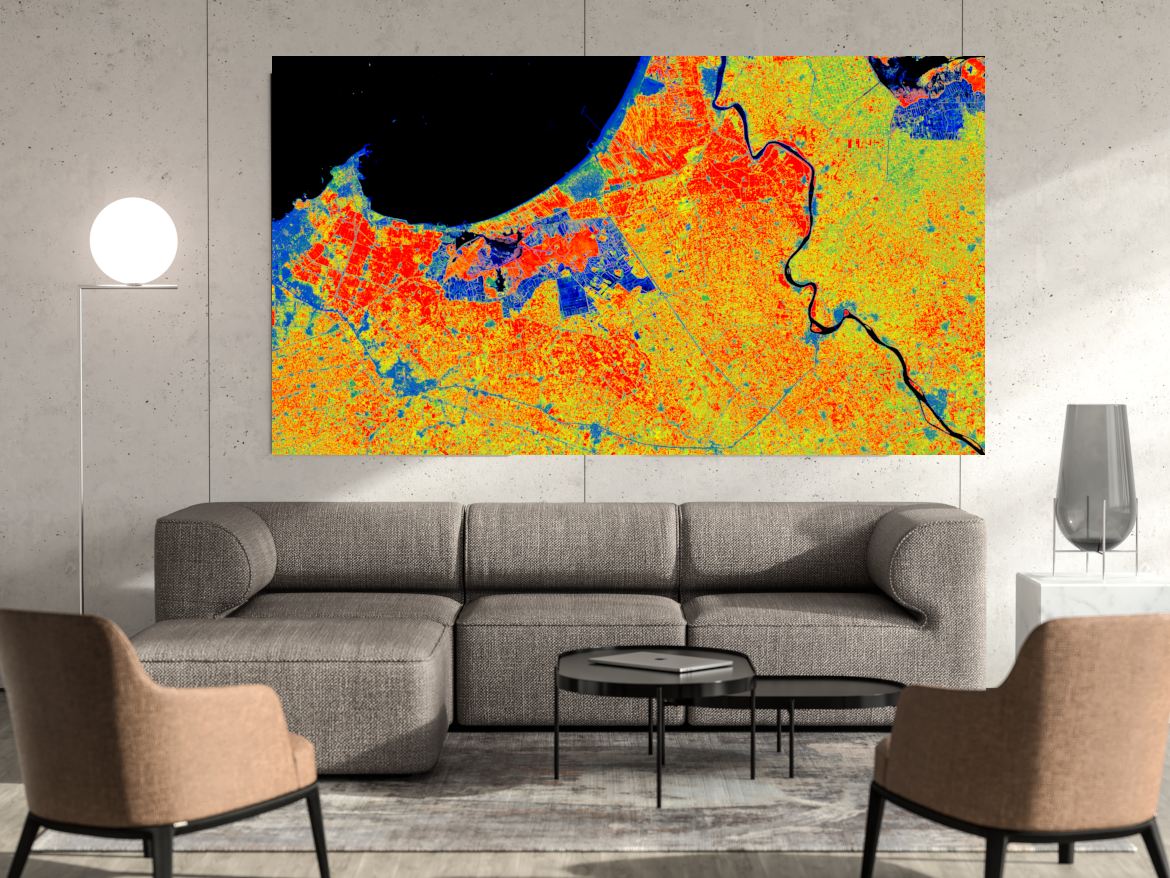

Due to the extreme aridity of Egypt‘s climate, 99% of the population is concentrated along the narrow Nile Valley and Delta, meaning that only about 5.5% of the total land area is used. 98% of Egyptians live on 3% of the territory. Apart from the Nile Valley, the majority of Egypt’s landscape is desert, with a few oases scattered about. Winds create prolific sand dunes that peak at more than 30 meters (100 ft) high. Egypt includes parts of the Sahara desert and of the Libyan Desert. These deserts protected the Kingdom of the Pharaohs from western threats and were referred to as the “red land” in ancient Egypt. Due to the absence of appreciable rainfall, Egypt’s agriculture depends entirely on irrigation. The main source of irrigation water is the river Nile of which the flow is controlled by the high dam at Aswan. It releases, on average, 55 cubic kilometers (45,000,000 acre·ft) of water per year, of which some 46 cubic kilometers (37,000,000 acre·ft) are diverted into the irrigation canals. Artwork Contains modified Copernicus Sentinel data [2020]